Safety First: Best Practices in Deep Excavation and Shoring Operations
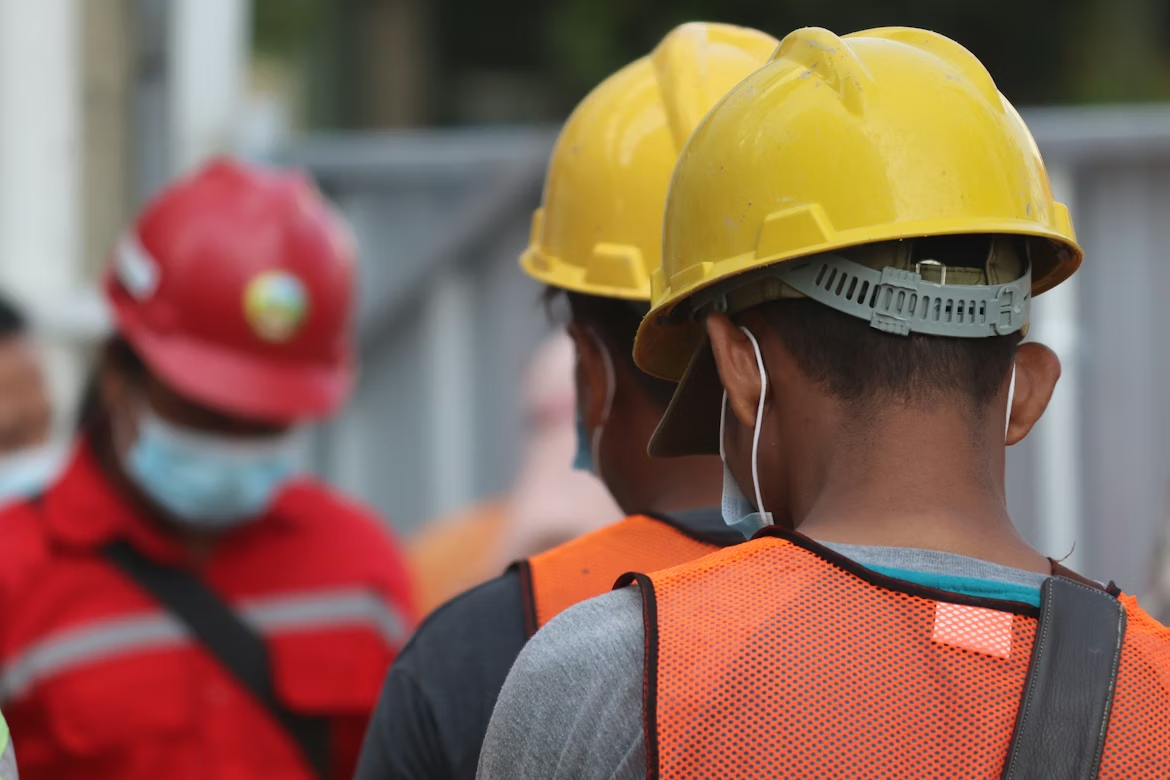
Deep excavation and shoring operations are among the most hazardous activities in the construction industry. Excavation collapses, falling objects, struck-by incidents, and underground utility strikes are leading causes of fatalities and serious injuries on construction sites worldwide. At Roots for Foundations, safety is not just a compliance requirement — it is embedded in every process, every decision, and every day of work.
This article outlines the key safety protocols we apply on all our sites and the principles that guide our approach to hazard management in foundation engineering.
Understanding the Risks
Before any excavation begins, it is essential to understand what can go wrong. The primary hazards associated with deep excavation and shoring include:
- Excavation collapse — the sides of an unsupported excavation can fail suddenly, burying workers with no warning
- Surcharge loading — plant, material stockpiles, or traffic near the excavation edge increase the risk of collapse
- Underground services — striking buried gas, water, electricity, or telecoms services
- Ground movement — damage to adjacent structures and utilities from soil settlement
- Falling objects — tools, materials, or spoil falling into the excavation where workers are present
- Flooding — sudden water ingress, especially in areas near the water table
- Confined space hazards — accumulation of toxic or oxygen-depleting gases in deep excavations
Pre-Construction Safety Measures
1. Comprehensive Site Investigation
Every project at Roots for Foundations begins with a detailed geotechnical investigation. Understanding soil conditions, groundwater levels, and the presence of underground services is the foundation (literally) of safe excavation design. Surprises on site are dangerous — we eliminate as many as possible before the first machine arrives.
2. Underground Service Survey
Before any digging, we conduct a full utility survey using ground-penetrating radar (GPR) and consulting with utility companies to locate all buried services. Hand digging is used to expose any services within the zone of influence before machine excavation begins.
3. Method Statement and Risk Assessment
Every operation begins with a detailed Method Statement describing exactly how the work will be carried out, and a Risk Assessment identifying hazards and the control measures in place. These documents are reviewed by our safety team and shared with the workforce before work commences.
On-Site Safety Protocols
Personal Protective Equipment (PPE)
All personnel on Roots for Foundations sites wear the mandatory site PPE at all times: hard hat, high-visibility vest, safety boots, and gloves. Additional PPE — including ear defenders, dust masks, and eye protection — is required for specific tasks. Zero exceptions.
Excavation Edge Protection
All open excavations are protected with secure edge protection (barriers, guardrails, or bunding) to prevent vehicles, plant, and personnel from approaching the edge inadvertently. Minimum clear zones are established and marked.
Slope Angle and Battering
Where excavations are not shored, sides are cut to a safe angle based on the soil conditions. In Qatar's conditions, this is determined by our geotechnical engineers — no assumptions are made about safe slope angles without proper analysis.
Daily Inspection Regime
Every excavation, shoring system, and support structure is inspected daily by a competent person before work begins. After any rainfall, significant change in ground conditions, or nearby blast or vibration event, additional inspection is mandatory before work resumes.
Toolbox Talks
Our site supervisors conduct daily toolbox talks — short briefings where the day's specific hazards and controls are communicated to the workforce. Workers are encouraged to raise concerns and stop work if they observe an unsafe condition.
"Every worker on our sites has the right and the responsibility to stop work if they see something unsafe. No project schedule is worth a single injury."
Emergency Preparedness
Despite best efforts, incidents can occur. Every Roots for Foundations site has:
- A site-specific emergency response plan
- Trained first aiders on every shift
- Rescue equipment for excavation collapse scenarios
- Clear emergency vehicle access routes maintained at all times
- Incident reporting and investigation procedures
Our Safety Record
We are proud of our safety record. Our commitment to rigorous safety management has kept our projects incident-free, protecting both our team and the communities around our sites. We believe that zero harm is achievable — and we work every day to prove it.
If you are selecting a foundation contractor for your project in Qatar, ask about their safety record, their safety management system, and their training programme. Safety is one of the clearest indicators of a professional, well-managed company. Contact Roots for Foundations to learn more.